
edited by sarina e. guerra
website by justin orsino
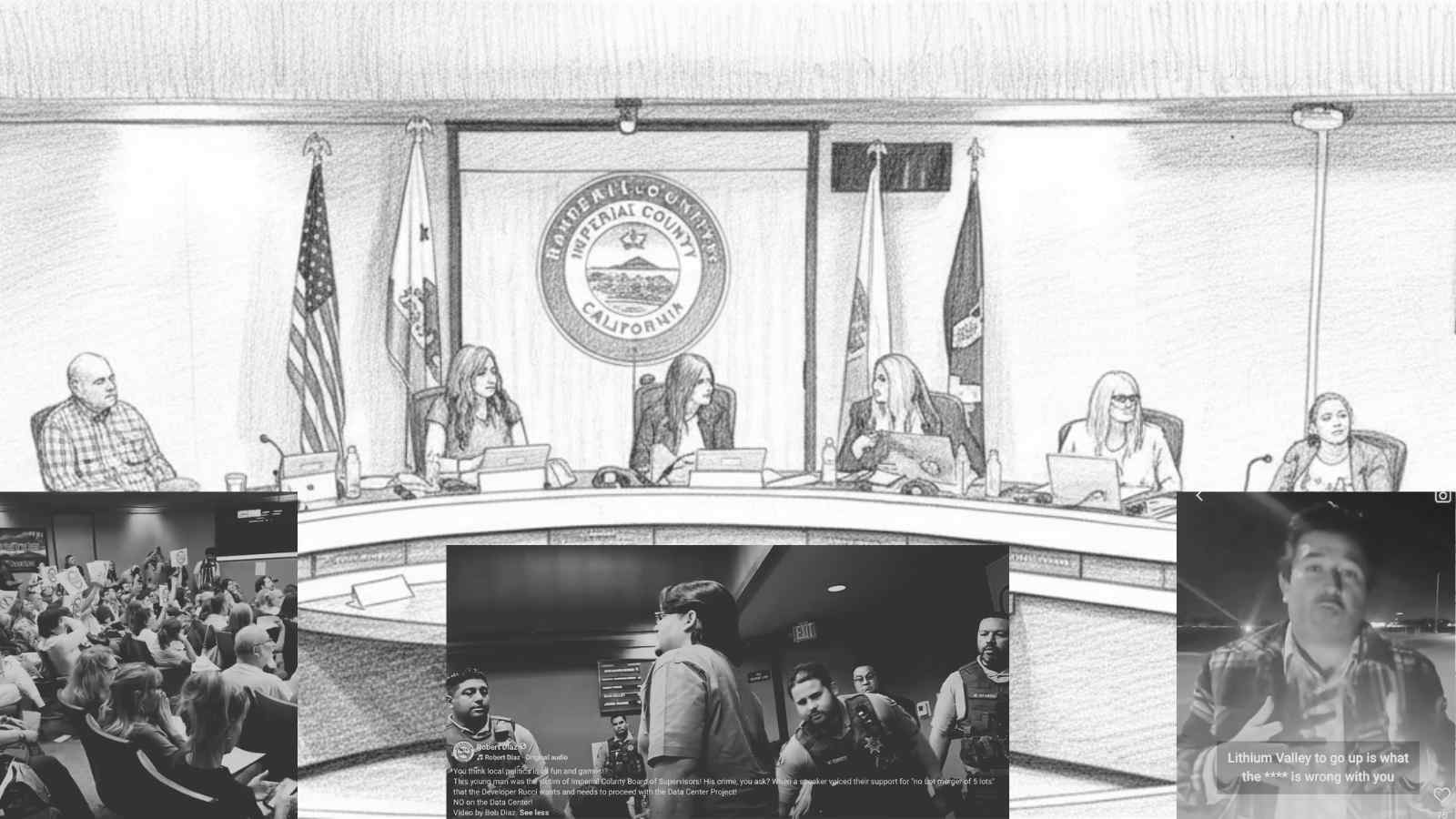
What began as a policy discussion about a proposed AI data center in Imperial County has evolved into something far more revealing.
This is part of a series that examines not only the project itself, but the breakdown in public discourse surrounding it—the competing narratives shaping perception, and the long-term consequences of a decision that extends beyond infrastructure.
Because this is no longer just a debate about development.
It is a test of how a community handles power, disagreement, and the truth.
The ongoing debate regarding the proposed artificial intelligence (AI) data center in Imperial County has transitioned from a standard policy discussion into a complex sociological conflict.
Recent developments indicate that the friction surrounding this project has moved beyond civic disagreement, revealing deeper underlying tensions within the community.
Ultimately, this dispute is not merely concerned with land use, economic development, or environmental conservation.
Rather, it serves as a struggle for institutional control, individual credibility, and the authority to define the narrative in a region that has historically felt marginalized in public discourse.
The Two Main Faces of the Fight

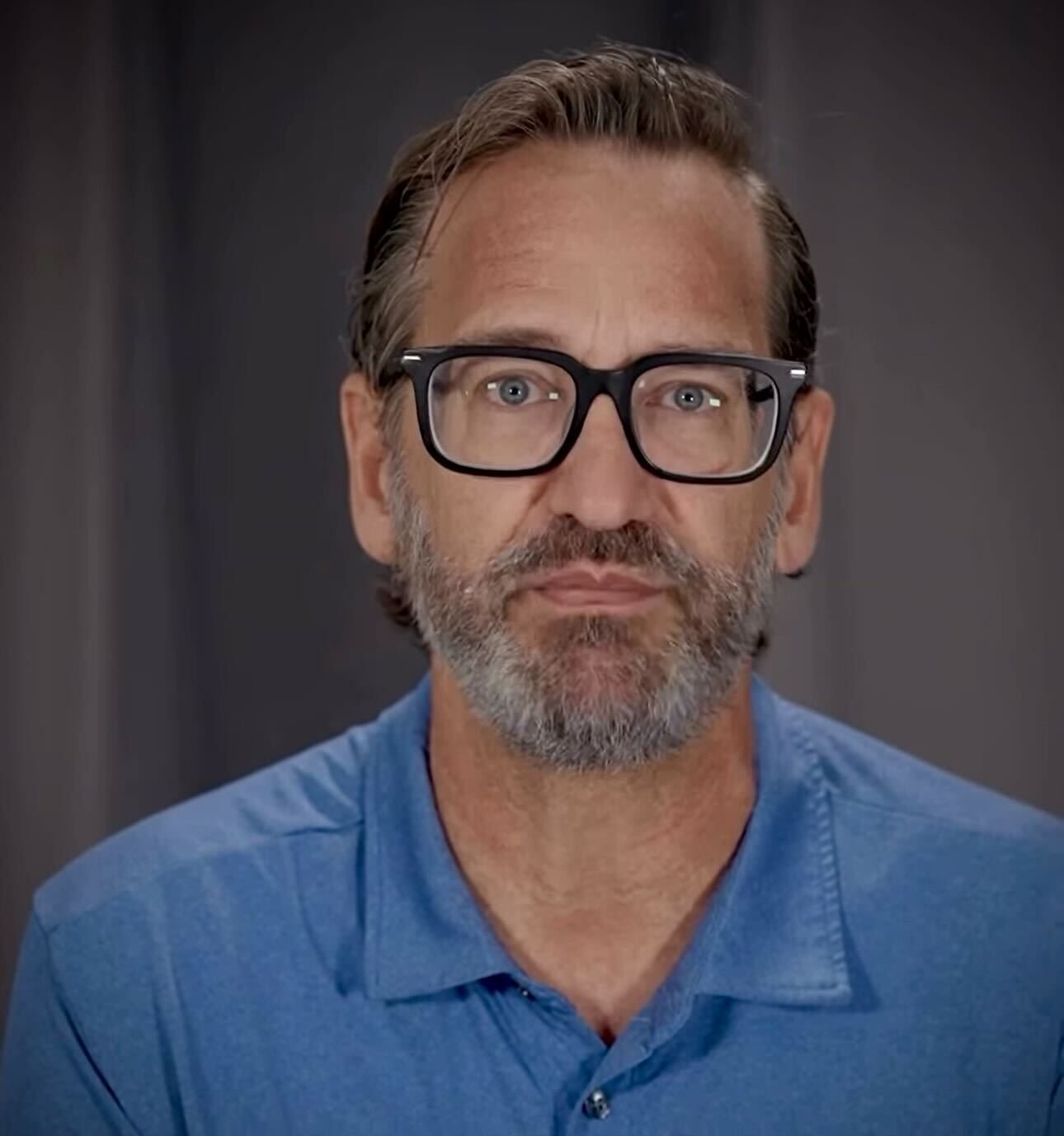
One perspective is represented by Carlos Duran (left), a vocal proponent of regional development. Utilizing social media as a primary platform, Duran actively challenges what he characterizes as misinformation; however, his rhetoric occasionally extends to delegitimizing opponents by labeling them as insincere actors with ulterior motives.
Conversely, Jake Tison (right) advocates for community protection, arguing that the project poses a significant threat to the local environment. His counter-narrative frequently involves allegations of manipulation and personal criticisms directed at the project’s supporters.
The high volume of this discourse suggests that the exchange has largely abandoned formal decorum.
This lack of constructive dialogue presents a significant obstacle to reaching a consensus. At this point, the obstacle is no longer complexity—
it is Behavior.
when the argument stops being about facts
At a critical juncture, the focus of the conversation shifted from the technical merits of the data center to ad hominem attacks.
Instead, it became about:
- Who’s lying
- Who’s corrupt
- Who’s drunk
- Who should be banned
This shift warrants careful consideration.
While the region faces a multimillion-dollar development with the potential for substantial regional restructuring, the dominant discourse remains preoccupied with personal grievances and the nuances of social media moderation.
Consequently, this does not resemble traditional civic engagement, but rather a breakdown of public order. And that breakdown did not happen quietly—it unfolded in full public view.
facebook is not a town hall
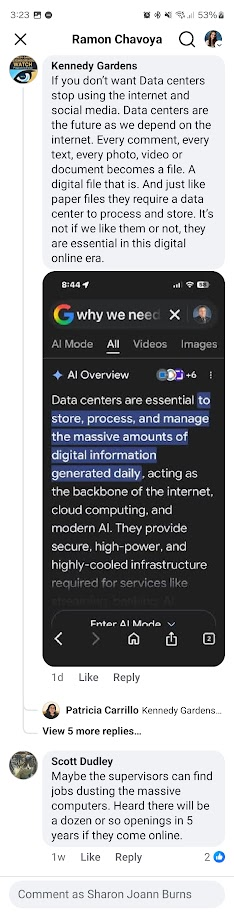

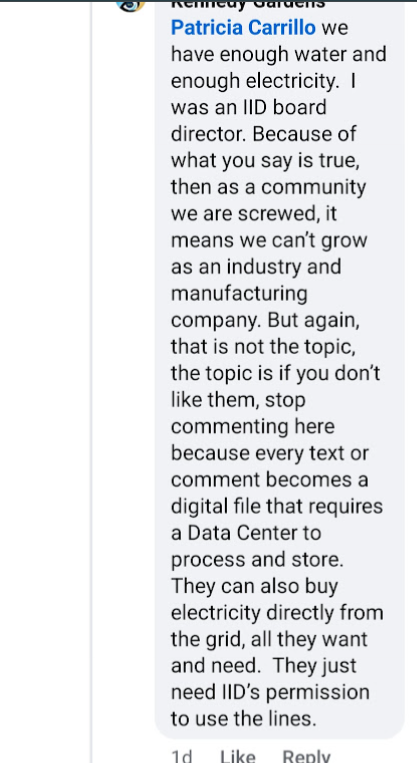
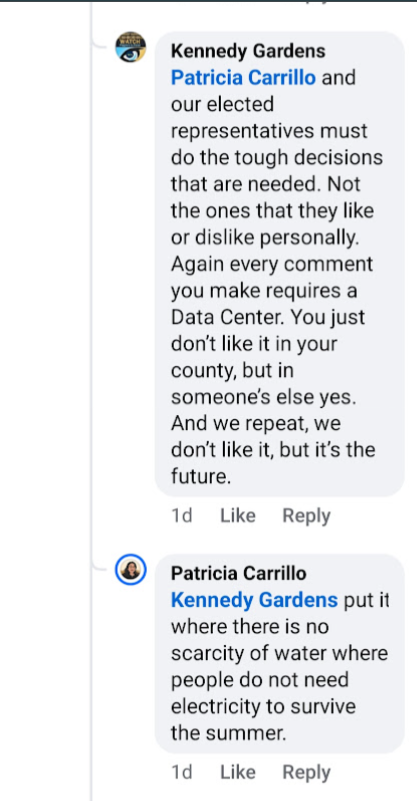
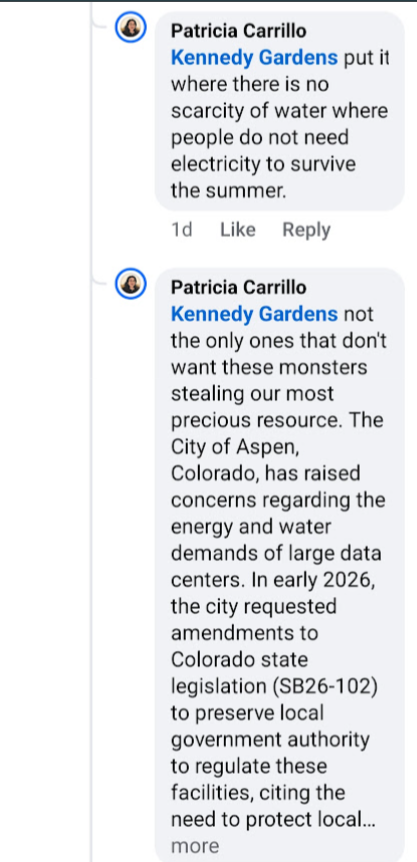
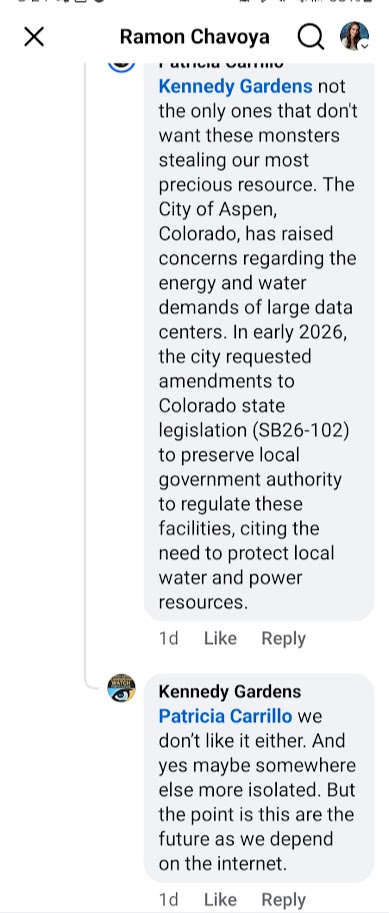
The above screenshots show a portion of an argument on Facebook. Included for context
Over time, Facebook has emerged as the primary—albeit unofficial—forum for Imperial Valley discourse.
In this digital environment, administrative actions such as bans and the circulation of screenshots often supersede substantive policy arguments.
This dynamic ensures that individuals with administrative authority or the loudest presence effectively govern the community narrative.
Such a paradigm should be viewed as a point of concern for all stakeholders. Because when visibility replaces accountability…
Perception begins to
override Reality.

the lawsuits should scare you
Furthermore, the developer, Imperial Valley Computer Manufacturing—under the leadership of Sebastian Rucci—has introduced litigation into the conflict.
Defamation claims have now become a central component of this narrative.
This development signifies a shift in the nature of the dispute.
The move toward legal action implies that public expression from either side carries the risk of significant judicial consequences. At that point, the conversation is no longer open—it is constrained by risk.
Consequently, one must evaluate the extent to which citizens feel empowered to participate in this discourse.
The chilling effect of potential litigation may selectively silence certain community voices while emboldening others.
the platform divide
One of the more revealing aspects of this debate is not just what is being said—but where it is being said.
In formal settings, such as public forums, candidates including Carlos Duran often present their positions in structured, policy-oriented terms. Discussions focus on infrastructure, energy demands, and potential regulatory approaches.
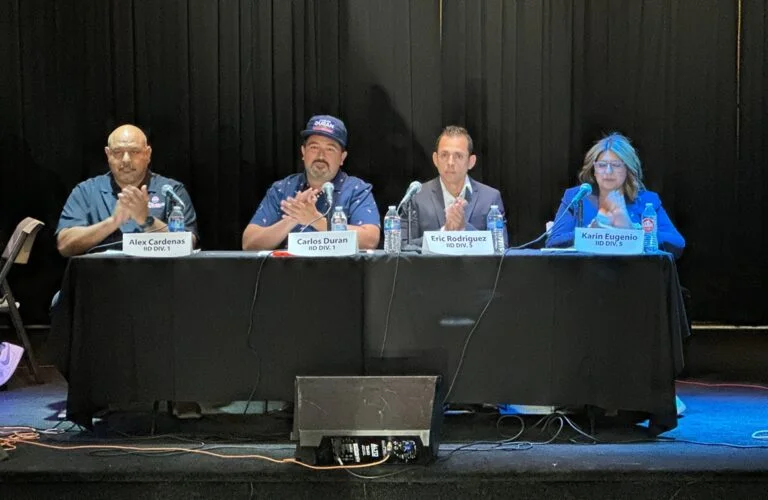
However, in less formal spaces—particularly social media—the tone can shift significantly. Messaging becomes more condensed, more reactive, and at times more dismissive of opposing concerns.
The following audio was taken from a video Carlos Duran posted (which I cannot find anywhere except via third parties). Language warning. The screenshot of said video is depicted below.
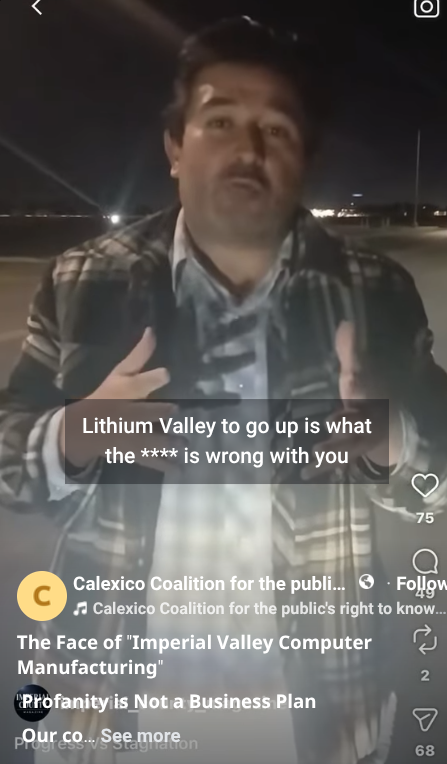
This contrast matters.
Because for many residents, social media is not just an outlet—it is their primary source of information.
And when tone changes across platforms, so does perception.
What reads as measured in one setting can feel combative in another. What appears nuanced in a forum can appear oversimplified online.
Over time, that inconsistency can deepen distrust—not necessarily because of the position itself, but because of how it is communicated.
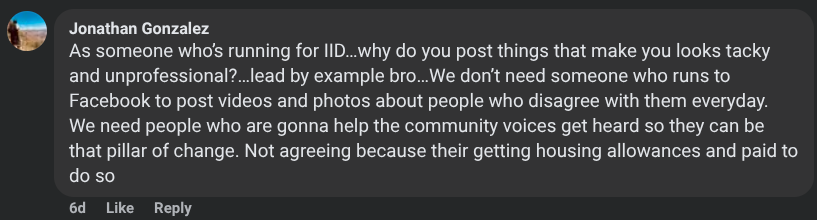
this is what distrust looks like
While it is common to describe the community as “divided,” this terminology may be insufficient.
The situation is more accurately described as a systemic collapse of trust.
This distrust is now manifest in all levels of regional interaction. And once distrust becomes the default, even accurate information struggles to gain traction.
There appears to be a profound lack of confidence between residents and developers, local leadership, and even among the citizenry itself.
Perhaps most significant is the skepticism regarding the veracity of the information being disseminated.
In the absence of trusted information channels, individuals gravitate toward social media, which often prioritizes spectacle over substance.
let’s be honest about what’s happening
Both proponents and opponents maintain that their actions are motivated by the best interests of the community.
However, an objective analysis suggests a different conclusion:
When the quality of public discourse becomes increasingly toxic, the collective well-being of the community is diminished…
Regardless of the Project’s
eventual Outcome.
The absence of informed debate and transparent information has been replaced by more combative elements.
Specifically, the following trends have emerged:
- character attacks
- power plays
- and a race to control the narrative
Once discourse reaches this state of degradation, the long-term social costs often outweigh any immediate political or economic victories.
The resulting societal damage is likely to persist well beyond the resolution of the current dispute.
the fundamental question facing the community
The primary concern is neither the physical construction of the data center nor the determination of absolute truth among the competing parties.
Instead, the situation necessitates a critical examination of the community’s evolving identity throughout this conflict.
Specifically, one must consider what type of society is being forged in the heat of this debate.
If the prevailing environment is one where:
- civil disagreement inevitably transitions into litigation regarding defamation,
- constructive discussion is replaced by digital hostilities, and
- neighbors are viewed as adversaries,
then the data center itself becomes secondary to the more profound social erosion occurring within the Imperial Valley.
conclusion
This dispute appears likely to persist for the foreseeable future, characterized by an ongoing cycle of social media exchanges, mutual accusations, and legal maneuvers.
Ultimately, the community must evaluate whether its objective is to reach a substantiated consensus or merely to secure a tactical victory over opposing factions.
This is an ongoing People’s Press investigation. Additional reporting to follow.

Licensed English tutor specializing in high school & college support — elementary students welcome too. ✍️📚
Buy me a Kofi: https://ko-fi.com/xolixia
read more from People's Press
 $2.8 billion or a bad deal? inside the imperial data center showdown
 data centers: elections have consequences
 dear local politicians: why cut ribbons when you could cut rent?
 mariachi acero goes to guadalajara, takes valley spirit to international conference
 latin legends: comedian paul rodriguez delivers farewell performance to raza right where he started
understanding the system: conversation over chaos
latin legends: comedian paul rodriguez delivers farewell performance to raza right where he started
understanding the system: conversation over chaos